

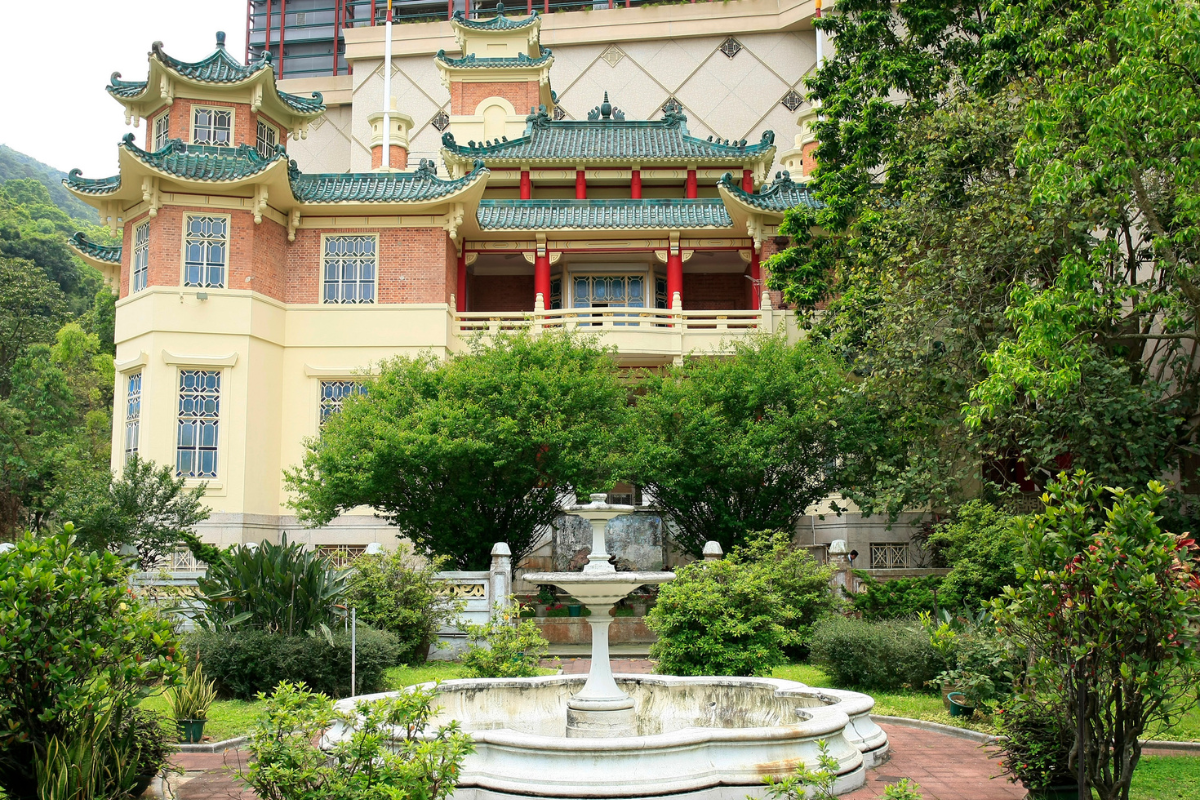

Haw Par Mansion is set to reopen to the public in September 2026 as Villa Haw Par, bringing the Tai Hang landmark back as an arts and culture hub after more than three years of closure. The new venue is expected to host exhibitions, film screenings, performances, workshops, guided tours and artist residencies, giving visitors access to one of Hong Kong’s most distinctive heritage buildings.
Built in 1935 by Aw Boon Haw, the entrepreneur behind Tiger Balm, the mansion was originally designed as a private family residence. It once formed part of the wider Tiger Balm Garden estate, remembered for its vivid sculptures, mythology-inspired scenes and strong theatrical identity. Today, the mansion remains a rare surviving piece of that world.
Architecturally, the Grade 1 historic building is known for its Chinese Renaissance style. From the outside, its cream façades, red columns, green glazed roof tiles and upturned eaves create a striking silhouette above Tai Hang. The exterior feels ceremonial but still residential, with garden paths, low walls and a circular fountain shaping the approach to the entrance.
The building also reflects clear Western influence. Its symmetry, bay windows, balconies and formal massing give the mansion a structured rhythm, while the Chinese rooflines and decorative details add colour and cultural depth. This mix gives Haw Par Mansion its unique character.
Inside, the mansion is equally expressive. Visitors can expect rounded doorways, arched openings, patterned floor tiles, painted glass panels and timber staircases with carved balustrades. These details do more than decorate the rooms. They guide movement, frame views and create a sense of depth throughout the building.
As Villa Haw Par, the mansion’s strongest asset will be the building itself. Rather than acting as a plain gallery space, it offers a layered heritage setting where architecture, memory and culture meet. Its reopening will give the public a new chance to experience one of Hong Kong’s most unusual historic mansions from the inside.
Header Image Credit: Heritage Department